Kim Kardashian and Britney Spears are the celebrities people mention most for vocal fry. Nine more are in the list below. Vocal fry is the low, creaky crackle your voice makes when your vocal folds vibrate slowly with very little air behind them.
For a voice actor, a little fry can be a character choice. Fry you don't mean to do can cost you the job, especially at the ends of lines.
Leave your email and we'll send you voice over practice scripts, with new ones every month.
Free. Unsubscribe any time. PrivacyI get asked about vocal fry a lot. It's usually somebody who just heard it on their own recording for the first time. You listen back and there it is at the end of every sentence. That little rattle.
Which celebrities are known for vocal fry?
These 11 names come up again and again when people talk about vocal fry. Listen to an interview with any of them and you'll hear it.
1. Kim Kardashian. She's the name most articles start with. A lot of people first noticed vocal fry because of her.
2. Britney Spears. Her speaking voice in interviews gets pointed to constantly, and you can hear the low creak in her singing too.
3. Zoë Kravitz. The actor has a low and relaxed speaking voice. Fans often mention the creak at the bottom of it.
4. Katy Perry. Another pop star whose casual speaking voice drops into fry, especially at the ends of sentences.
5. Ariana Grande. She can sing very high, which surprises people. Her speaking voice often sits at the bottom of her range.
6. Scarlett Johansson. Her low, husky voice is a big part of why people recognize it, and there's a little fry in it.
7. Kesha. The singer uses that gritty low edge in her music as part of her sound.
8. Ira Glass. Yes, men do it too. The host of This American Life gets named a lot. He did a segment on his show about listeners complaining about vocal fry from his reporters.
9. Emma Stone. Her raspy speaking voice is one of the things people know her for, with some fry at the bottom of it.
10. Dakota Johnson. Her soft, low way of talking in interviews comes up in nearly every vocal fry list.
11. Gwyneth Paltrow. The actor and founder of Goop has a relaxed speaking voice that drifts into fry.
Notice something, though. Every one of these people is famous for something other than their voice. Fry is part of how they talk. It isn't why anyone hires them.
What is vocal fry?
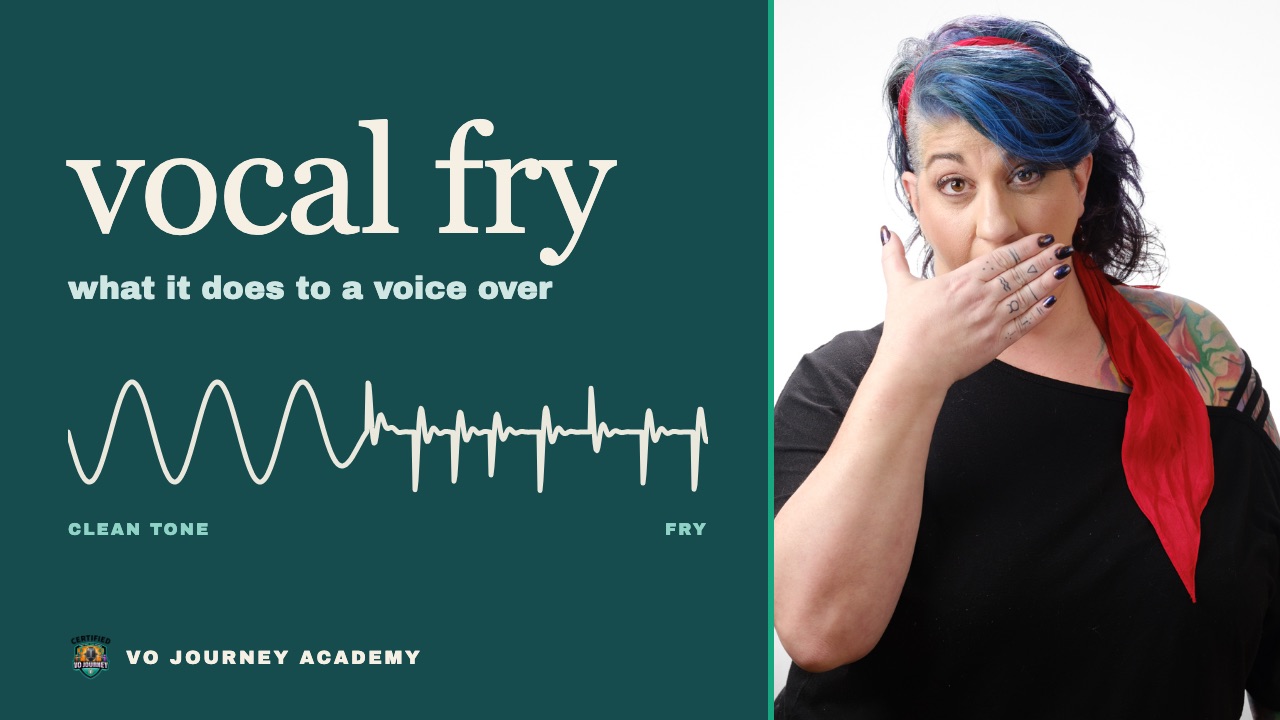
Vocal fry is the lowest register of your voice. It also goes by pulse register or creaky voice.

Your voice has registers, sort of like gears. Way up top is falsetto. In the middle is your normal speaking voice. Down at the very bottom is fry.
In fry, your vocal folds are loose and very little air is moving through them. So you get a slow, popping, crackly sound in place of a smooth tone.
It's the sound a lot of people make at the end of a long sentence when they've run out of breath. Almost everybody does it a little in normal conversation.
Is vocal fry bad?
People are split on it. One well-known study found it can count against you.
A 2014 study in the journal PLOS One played recordings of young adults to 800 listeners. Each speaker was heard in a normal voice and with fry.
Listeners rated the fry voices as less competent and less trustworthy. They rated them as less educated too, and said they'd be less likely to hire them. The effect was stronger for women's voices than for men's.
A lot of people have pointed out that the criticism lands harder on young women than on men like Ira Glass. That's fair too.
I'm a voice coach and not a doctor, so I'll stay in my lane on the health side. If something hurts, stop. If you think you have a voice problem, see a doctor. That's the advice from the National Institutes of Health too.
For a voice actor, the real question is simpler. Is the fry a choice, or is it an accident?
Does vocal fry hurt you in voice over?
When it's an accident, usually yes. And the microphone makes it worse.
A good condenser mic, close to your mouth in a quiet booth, picks up every little crackle. Something nobody notices across a dinner table becomes really obvious in your headphones.
It shows up most at the ends of lines. You start a sentence with plenty of air, and by the last two words you've run out. Your pitch drops and the end of the line crackles away.
In a commercial, the last words are often the brand name. If the client's name is the part you mumbled into fry, that read isn't getting picked.
It shows up in audiobooks too. Narration is long, and when you get tired your voice sinks. Listeners start losing the ends of sentences, and the narrator sounds bored even when they're not.
Here is how I'd think about it by type of job.
| Type of job | Does fry help? | What to do |
|---|---|---|
| Commercials | Rarely, and never on the brand name | Keep air in reserve for the last few words |
| Audiobook narration | No for the narrator voice, sometimes for a character | Keep chapter 30 as clean as chapter 1, and take breaks |
| E-learning and corporate | No, it reads as unsure | Clear, steady endings |
| Animation and creatures | Yes, when it's the character | Do it gently and never push |
| Video game villains | Often, as a texture | Build it with placement and air, without grinding your throat |
| Older characters | A little, for age | Just a touch of gravel |
When is vocal fry a good choice?
When you mean it. Characters live on texture, and fry is one of the textures you can use.
In one of our Launch Pad classes, we worked on voices across age and gender. The note on a grandpa voice was that it worked because it didn't go way down deep. It had just a little bit of gravel for age. That's the right amount most of the time.
In another class, a read with some rasp in it made a tough, suspicious character sound like she'd been through something. Same words, completely different person. That's fry doing its job.
Monsters and villains use it all the time too. If you feel any strain, back off. Drink some water before you come back to it.
How do you stop vocal fry when you don't want it?
Fix your air and your energy, because that's where most unwanted fry comes from.
Breathe before you run out. Mark breath spots in your script so you're never squeezing the last words out on empty.
Think through to the last word. A lot of fry comes from mentally finishing the sentence before your mouth does.
Watch your pitch at the ends of lines. In my old ten tips video I said to end down on the last few words when you want to sound authoritative. That's still true. Just go down with air behind it.
Lift your energy a little. Sit up or stand. Low energy pulls your voice into the basement.
Then record and listen. Read a 30-second commercial, and play back only the last three words of every sentence. You'll know in one listen if this is your habit.
How do you practice vocal fry on purpose?
Gently, and at low volume. Start from your normal speaking voice and let the pitch slide down until you hear the crackle. Stay there for a second and come back up.
Don't push it louder. Fry isn't a loud sound.
Then put it on a real character. Do the line clean first, then with a little fry, then with more. Listen to which one tells the story best. Usually it's the one in the middle.
We have free creature scripts and video game villain scripts for the fry on purpose. The 30-second commercials are better for practicing clean endings.
Questions I hear most
Why do so many celebrities have vocal fry?
A lot of it is just how people talk when they're relaxed and speaking low. Once a few very famous voices got noticed for it, people started listening for it.
Can casting directors hear vocal fry in an audition?
Yes. A microphone makes it easier to hear. It matters most at the ends of lines and on the brand name in a commercial.
Does vocal fry make your voice sound deeper?
It makes you sound lower for a moment, but it isn't a deeper voice. I cover that in my post on making your voice deeper for voiceovers.
How do I stop vocal fry at the end of my sentences?
Take a breath before you run out, and keep the thought going to the final word. Then listen back to only the last few words of each line.
What to do next
The hardest part of fixing a habit like this is hearing it in the first place. That's what a coach is for.
Once a month we open all four of our live classes on Zoom for a week, for free. Save a seat for the next Free Class Week and hear real notes on real reads.
Go out there and audition.
Anthony