Voice over equipment guide

Voice over gear, and what to buy first.

Mics, interfaces, headphones, booths, software and the small stuff, picked for voice actors at every budget. Every pick says who it's for and why we'd buy it.

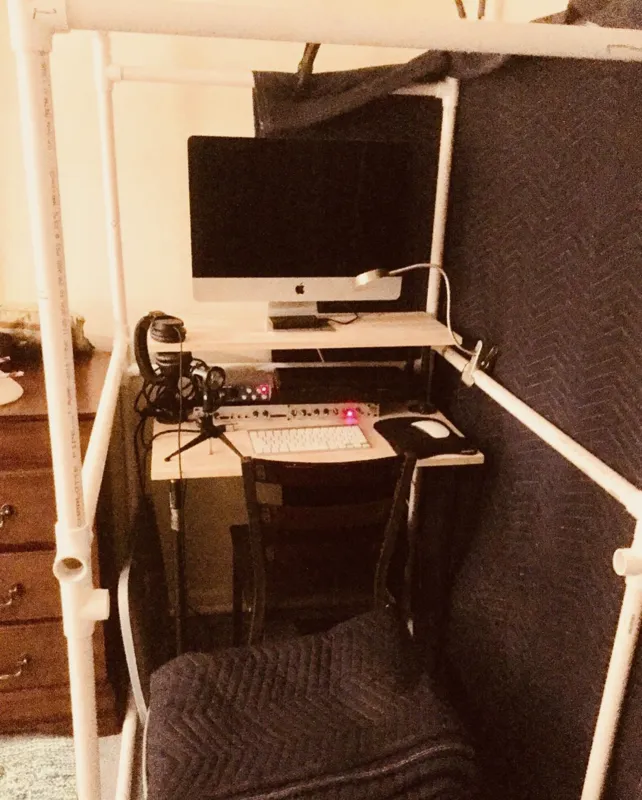
You don't need to spend a lot to start. Anthony started on a $40 mic in a booth made of PVC pipe and packing blankets.

146 picks10 kinds of gear3 complete kits25 we earn nothing on
Anthony's first booth in 2017: a PVC pipe frame with packing blankets around a small desk and computer
Anthony's first booth, 2017
$40 micPantyhose pop filter
Free printable

Get the starter kit as a one-page checklist

The 8 things to get first, in the order to buy them, on one page you can print. We'll also send you our free practice scripts.

Free. Unsubscribe any time. Privacy
$$
If you only buy one thing

Fix your room first, then get a RØDE NT1 Signature.

The room matters more than anything you buy. Record in a closet full of clothes, or hang moving blankets around you. Then get a condenser like the RØDE NT1 Signature and plug it into a small interface. It's extremely quiet, the shock mount and pop filter come in the box, and a lot of voice actors never replace it.

If the mic shows up echo, the fix is the room, not a dynamic mic. Record in Audacity for free to start. And if you have no interface and want the simplest possible start, a USB mic like the ATR2100x-USB plugs straight into your computer. It's a fine first step, just not our pick.

  1. Your space. A closet full of clothes, or blankets around you. The room matters more than the mic.
  2. A condenser mic and an interface. The NT1 Signature and an SSL 1 are the pair we'd start with.
  3. Closed-back headphones, so you hear what you really sound like.
  4. A stand and a pop filter, so the mic stays put and your P's stay soft.
  5. Editing tools, once you're sending auditions every week.
You don't need to spend a lot to start

My first mic cost $40.

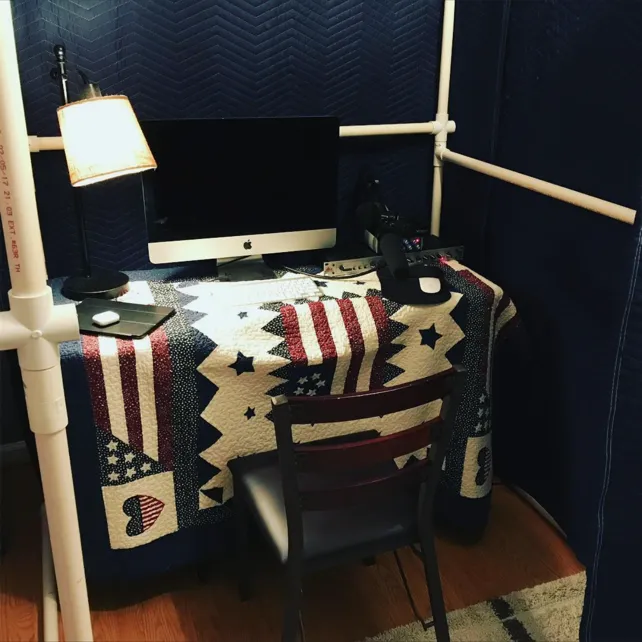
My first booth was PVC pipe and packing blankets next to the refrigerator. It went up and came down every night. The mic was a black $40 Blue Snowball on a mic stand I borrowed from school, and my pop filter was a pair of pantyhose stretched over a wire coat hanger. I built my business in that hut.

I booked my first audiobook in my first month as a voice actor. The gear was cheap and the acting did the work, and that's still what we teach.

So buy what you need to sound clean and dry, and put the rest into getting better at the acting. Upgrade the gear when the work pays for it.

Anthony
Inside the packing-blanket booth at night, with a lamp, a computer and a microphone
The packing-blanket booth, 2017. It went up and came down every night.

Three complete kits

Pick the one that fits where you are right now. Every piece is further down the page with a link, so you can buy it bit by bit.

Just starting

Starter kit

Roughly $500 to $600, or about $250 with a USB mic

You're starting out and want a clean, dry sound at home without spending much. The NT1 Signature comes with its own shock mount, pop filter and cable.

No interface and want one cable? The ATR2100x-USB plugs straight into your computer. It's the simplest start, though we'd still pick the condenser. Audacity is free to start, and Adobe Audition is what we use at VO Journey.

Ready to upgrade

Building kit

Roughly $1,000 to $1,500

You're auditioning every week and want a sound that passes casting and audiobook checks every time.

Travel a lot, or no closet to spare? Put the Porta-Booth Pro where the Kaotica is.

Full-time

Pro kit

Roughly $2,500 to $15,000, and the booth is most of that

Voice over is your job, you get directed sessions and you need real isolation.

Mostly commercial and promo work? Many pros add a Sennheiser MKH 416 next to the 103. A VO1 Desktop booth costs far less than a walk-in.

All the gear

Filter by what you need and what you want to spend. Price bands are rough and were checked in September 2026, so click through for today's price.

$ is under $100, $$ is about $100 to $300, $$$ is about $300 to $1,000 and $$$$ is over $1,000.

Showing all 146 picks

Microphones

USB mics plug straight into your computer. XLR mics need an audio interface, but they're easier to upgrade. Dynamic mics hear less of your room, and condensers hear more detail, including your room.

Audio-Technica
$USBXLRDynamic

Audio-Technica ATR2100x-USB

What it is
A dynamic mic with both USB and XLR outputs.
Who it's for
Anyone with no interface who wants the simplest possible start.
Why
It plugs straight into your computer, and the XLR output still works with an interface later. For audiobooks we'd still pick a condenser and a treated room.
$USBXLRDynamic

Samson Q2U

What it is
A USB and XLR dynamic mic, sold as a pack with a small desk stand and both cables.
Who it's for
Beginners who want one cheap mic that plugs straight in now and works with an interface later.
Why
Our tech coach calls the Q2U great for the money, and says you'll still want some treatment. A dynamic doesn't replace fixing the room.

Photo: Sweetwater

FIFINE
$USBXLRDynamic

FIFINE Dynamic Microphone (XLR and USB)

What it is
A budget dynamic mic with USB and XLR outputs.
Who it's for
Anyone starting on the smallest budget, over USB.
Why
It's forgiving of a noisy home, but treat the room anyway, because a dynamic won't fix echo. It works over USB now and with an interface later.
Neat
$XLRCondenser

Neat Worker Bee II

What it is
A cardioid condenser mic, XLR, with the shock mount built in.
Who it's for
Beginners going the XLR route on a tight budget.
Why
It's about the cheapest condenser we'd put on this page, and you don't need to buy a separate shock mount.
$XLRCondenser

Audio-Technica AT2020

What it is
Audio-Technica's cardioid condenser mic, XLR.
Who it's for
People who find one cheap, or already own one.
Why
It's bright up top and can make you sound more sibilant. At today's price the RØDE NT1 Signature is the better buy.

Photo: Sweetwater

$$XLRCondenser

RØDE NT1 Signature Series

What it is
The XLR-only NT1, sold with a shock mount, a pop filter and a cable.
Who it's for
Beginners buying their first XLR condenser for a treated closet or booth.
Why
It's extremely quiet and it comes with the mount and pop filter. Replace the included cable when you can.

Photo: Sweetwater

$$USBCondenser

RØDE NT-USB+

What it is
A USB condenser mic with a headphone jack on the mic.
Who it's for
Beginners who want one cable and a clean sound.
Why
You plug your headphones into the mic itself, so it's a very simple setup that still sounds good.

Photo: Sweetwater

$$USBXLRDynamic

RØDE PodMic USB

What it is
A dynamic mic with both USB and XLR outputs.
Who it's for
Anyone who wants a solid USB mic they won't outgrow fast.
Why
It's heavy and well built, and it's forgiving of a noisy home. Treat the room anyway. Switch to the XLR output when you get an interface.

Photo: Sweetwater

$$USBXLRDynamic

Shure MV7+

What it is
Shure's USB and XLR dynamic mic, with built-in processing.
Who it's for
Beginners who might do some podcasting or streaming as well.
Why
It sounds good straight away over USB. Turn the built-in processing off for auditions and do your own editing.

Photo: Sweetwater

$$XLRDynamic

Shure MV7X

What it is
The XLR-only version of the MV7, a dynamic mic.
Who it's for
Podcasters and voice actors who like a close, dynamic sound.
Why
It's forgiving of a noisy home, but treat the room anyway. It's a quiet mic, so pair it with an interface that has plenty of gain.

Photo: Sweetwater

$$USBCondenser

Blue Yeti (Blackout) kit

What it is
A USB condenser mic bundled with a boom arm, pop filter and shock mount.
Who it's for
Someone who wants everything in one box.
Why
It's easy, but the Yeti hears a lot of room. Set it to cardioid and record somewhere dead.

Photo: Sweetwater

Neat
$$XLRCondenser

Neat King Bee II

What it is
A large-diaphragm condenser that comes with a shock mount and a pop filter.
Who it's for
Someone ready for a fuller sound than a starter mic.
Why
The mount and pop filter are in the box, so there's nothing else to buy for it.
$$XLRCondenser

Lewitt LCT 440 PURE

What it is
Lewitt's large-diaphragm condenser, XLR.
Who it's for
Voices that want a bit more high-end lift than an NT1 gives.
Why
It adds sparkle up top for a lot less than a TLM 103. On some voices that can show up as sibilance.

Photo: Sweetwater

$$XLRCondenser

Audio-Technica AT2035

What it is
Audio-Technica's large-diaphragm condenser, XLR, with a shock mount.
Who it's for
Beginners who want a large-diaphragm sound for not much more than an AT2020.
Why
It's a little smoother than the AT2020, and it has a pad and a low-cut switch.

Photo: Sweetwater

$$XLRUSBCondenser

RØDE NT1 5th Gen

What it is
A large-diaphragm condenser with both XLR and USB outputs.
Who it's for
The step up from your first mic, and one a lot of people never need to replace.
Why
It's one of the quietest condensers made, so your noise floor stays low, and a lot of voice actors start on it and never switch. It likes a treated room.

Photo: Sweetwater

Tz
$$XLRCondenser

Tz Stellar X2

What it is
Tz's large-diaphragm condenser, XLR, with a shock mount.
Who it's for
Intermediate voice actors who want a warm condenser without the Neumann price.
Why
It's a popular budget pick for home VO booths.
Tz
$$XLRCondenser

Tz Stellar X2 Vintage

What it is
The vintage-voiced version of the Stellar X2.
Who it's for
Narrators who want a warmer, rounder tone.
Why
It's tuned darker than the standard X2, which can suit a bright voice.
$$XLRCondenser

Sennheiser MK 4

What it is
A large-diaphragm condenser, XLR.
Who it's for
Intermediate voice actors who want a clean, neutral mic from a big-name maker.
Why
It's plain and accurate, which makes it easy to edit and easy to match from one session to the next.

Photo: Sweetwater

SYNCO
$$XLRCondenserShotgun

SYNCO Mic-D2 shotgun

What it is
A budget shotgun mic, XLR.
Who it's for
Anyone curious about the shotgun sound used in a lot of commercial and promo work, before paying for a 416.
Why
It's a cheap way to learn how a shotgun behaves. They're very directional, so where you point it matters.
$$XLRCondenserShotgun

Audio-Technica AT875R

What it is
A short shotgun mic, XLR.
Who it's for
People who want the shotgun sound for commercial work without 416 money.
Why
It sounds clean and nearly finished with very little processing, and it rejects room sound from the sides and back.

Photo: Sweetwater

Tz
$$$XLRCondenser

Tz Stellar X3

What it is
A large-diaphragm condenser with a K67-style capsule, XLR.
Who it's for
Narrators after the classic big-studio condenser sound on a smaller budget.
Why
The K67 capsule is the design behind a lot of famous studio mics, for far less money.
Roswell
$$$XLRCondenser

Roswell Mini K87

What it is
Roswell's small-bodied condenser with a very flat, smooth response.
Who it's for
Narrators with bright or sibilant voices.
Why
It has a smooth top end, so it's kinder to esses than a lot of bright condensers.
See it at Roswell Pro AudioNot a paid link. We earn nothing on this.
$$$XLRCondenser

Lauten Audio LS-208

What it is
A directional condenser built to pick up less of the room.
Who it's for
People in noisy or awkward spaces who can't build a booth yet.
Why
It focuses on your voice more than the room. It needs about 58 dB of clean gain, so pair it with a strong interface or a FetHead Phantom.

Photo: Sweetwater

$$$XLRDynamic

Shure SM7B

What it is
The classic broadcast dynamic mic, XLR.
Who it's for
Podcast and broadcast voices who like a close, warm dynamic sound.
Why
It sounds great up close, but it needs a lot of gain, so budget for a strong interface or an inline booster. It won't fix an untreated room, and cranking the gain adds hiss.

Photo: Sweetwater

$$$XLRCondenser

Neumann TLM 102

What it is
Neumann's compact large-diaphragm condenser, XLR.
Who it's for
Voice actors moving up to a pro mic who don't want to spend TLM 103 money.
Why
You get a Neumann sound a lot of clients know, for less than the 103.

Photo: Sweetwater

$$$XLRCondenserShotgun

Sennheiser MKH 416

What it is
The short shotgun mic you've heard on a huge amount of commercial and promo work.
Who it's for
Working pros doing commercial and promo work in a well-treated booth.
Why
It's an industry standard, which matters when a client asks for that sound. It's unforgiving in a bad room.

Photo: Sweetwater

$$$XLRCondenserShotgun

RØDE NTG3

What it is
A shotgun condenser, built to shrug off humidity.
Who it's for
People who want a 416-style shotgun for less.
Why
It's the shotgun our tech coach uses. A shotgun can help when the noise comes from one direction, but it still needs a treated space.

Photo: Sweetwater

$$$$XLRCondenser

Neumann TLM 103

What it is
A large-diaphragm condenser, and one of the most common mics in pro VO booths.
Who it's for
Full-time voice actors with a properly treated booth.
Why
Very low self-noise and a sound clients know. It's very sensitive, so if your treatment isn't heavy enough you'll hear the room. Upgrade because it suits your voice, not because it's a Neumann.

Photo: Sweetwater

$$$$XLRCondenser

Lauten Audio Clarion FC-357

What it is
Lauten's flagship condenser, with switches to shape its sound.
Who it's for
Working pros shopping for a high-end mic.
Why
Our tech coach calls it a wildcard alternative to the Neumann 103. Try one on your own voice before you commit, and make sure the room is ready for a mic this detailed.

Photo: Sweetwater

$$$$XLRCondenserShotgun

Sennheiser MKH 8060

What it is
Sennheiser's compact modern short shotgun, a smaller cousin of the 416.
Who it's for
Pros who work a lot of commercial and promo and want a smoother shotgun.
Why
The 416 is still the standard, and the 8060 is our tech coach's personal favorite. It's a real investment, so buy it when the work pays for it.

Photo: Sweetwater

$$$$XLRCondenser

Neumann U 87 Ai

What it is
The famous studio condenser with switchable pickup patterns. The dream mic.
Who it's for
Established voice actors with a treated studio, and anyone saving up for the one mic they've always wanted.
Why
It's the studio standard people picture when they think of a voice over mic. A TLM 102 or 103 gets most home booths most of the way there for far less.

Photo: Sweetwater

Audio interfaces

An interface turns an XLR mic into something your computer can record. One input is plenty for most voice actors.

$

Behringer U-Phoria UMC202HD

What it is
A two-input USB interface, and about the cheapest one we'd use.
Who it's for
Tight budgets.
Why
It does the job for the least money, and the Midas-designed preamps are decent.

Photo: Sweetwater

$

Focusrite Scarlett Solo (3rd Gen)

What it is
A one-mic USB interface.
Who it's for
Anyone with one XLR mic, which is most voice actors.
Why
It's fine if all you need is gain for a sensitive mic like the NT1. It gets noisy turned up high, so it's a poor match for quiet mics.

Photo: Sweetwater

$$

Focusrite Scarlett Solo (4th Gen)

What it is
The current Scarlett Solo, with more gain and less noise than the 3rd Gen.
Who it's for
New buyers who want the current model.
Why
The extra clean gain helps with quiet mics. For about the same money we'd pick the SSL 1 now.

Photo: Sweetwater

$$

Solid State Logic SSL 1

What it is
A compact one-mic USB interface with a built-in analog highpass filter.
Who it's for
Anyone buying a first interface, or replacing a Scarlett.
Why
Very clean, quiet preamps and plenty of gain for the price. The highpass takes out room rumble before it's recorded.

Photo: Sweetwater

$$

Solid State Logic SSL 2 MKII

What it is
A two-input USB interface with an analog highpass filter.
Who it's for
People who want two inputs and very clean gain.
Why
It has very low noise and lots of gain, so it can drive quiet mics without a booster.

Photo: Sweetwater

$$

Solid State Logic SSL 2+ MKII

What it is
The bigger version of the SSL 2, with two inputs and two headphone outputs.
Who it's for
People who record with a partner, or want a second pair of headphones for a director in the room.
Why
Same clean preamps and low noise as the smaller one. Pick this only if you need the extra inputs and outputs.

Photo: Sweetwater

$$

Focusrite Vocaster One

What it is
A one-mic interface made for voice, with an auto gain button.
Who it's for
Beginners who are nervous about setting levels.
Why
Auto gain sets your level for you. It's built for podcasters, but it works fine for VO.

Photo: Sweetwater

$$

Audient EVO 4

What it is
A small two-input interface with a smart gain button.
Who it's for
Beginners short on desk space.
Why
Smart gain sets your levels, and it's small enough to live in a closet booth.

Photo: Sweetwater

$$

Focusrite Scarlett 2i2 (3rd Gen)

What it is
A two-input USB interface.
Who it's for
People who might record with a second person, or want a spare input just in case.
Why
Two inputs cost a little more but give you room to grow. The 4th Gen is current if you're buying new.

Photo: Sweetwater

$$

Universal Audio Volt 2

What it is
Universal Audio's two-input USB interface.
Who it's for
People who like a vintage-style sound and may want UA's plugins later.
Why
The vintage mode adds a little warmth, and it's a cheap first step into the UA gear a lot of pros use.

Photo: Sweetwater

$$

Universal Audio Volt 176

What it is
A one-input USB-C interface with a built-in analog compressor and a vintage preamp mode.
Who it's for
People who want a bit of color going in and only need one mic.
Why
Our tech coach likes the Volt line for its preamp flavor and the real analog compressor. Anything you add on the way in is recorded for good, so keep the settings gentle.

Photo: Sweetwater

$

FetHead Phantom inline booster

What it is
A small booster that plugs in between the mic and the interface.
Who it's for
Anyone pairing a quiet, gain-hungry mic with a small interface.
Why
It adds clean gain so you don't have to crank a noisy preamp. You don't need it with a sensitive mic like the NT1.

Photo: Sweetwater

$$

Cloud Microphones Cloudlifter CL-1

What it is
The best-known in-line booster. It plugs in between a dynamic mic and the interface and adds about 25 dB of clean gain.
Who it's for
Anyone running a gain-hungry dynamic like the SM7B into a small interface.
Why
It lets your interface sit at a quieter setting, so there's less hiss. It's made for dynamic and ribbon mics, and you don't need it with a condenser like the NT1.

Photo: Sweetwater

$

sE Electronics DM1 Dynamite

What it is
A small in-line booster that plugs straight into a dynamic mic and adds about 28 dB of gain.
Who it's for
People with a quiet dynamic mic who want a cheaper Cloudlifter alternative.
Why
It does the same job as a Cloudlifter for less money. Same rule applies, it's for dynamic mics, not condensers.

Photo: Sweetwater

$$$

Universal Audio Apollo Solo USB

What it is
UA's smallest Apollo, with one DSP chip for recording through UA plugins as you go. This is the USB-C version.
Who it's for
People on Windows, or anyone who wants an Apollo without the Twin's price.
Why
Our tech coach recommends the USB version on Windows. Like any Apollo it can be fiddly, and anything you record through is printed, so go gently.

Photo: Sweetwater

$$$$

Universal Audio Apollo Twin X

What it is
A pro desktop interface with built-in UAD processing.
Who it's for
Established voice actors who want studio-grade preamps and plugins.
Why
You can record through UA's plugins in real time. It's powerful but fiddly, and whatever you record through is printed, so keep settings gentle.

Photo: Sweetwater

Headphones

Closed-back for recording, so your playback doesn't leak into the mic. Open-back is better for editing, because closed cups exaggerate the bass.

Free

The wired earbuds you already have

What it is
Any wired earbuds.
Who it's for
Your first week or two of practice.
Why
They're fine for learning. Wired, because Bluetooth adds a delay. Upgrade before you start sending auditions.
Already in your drawer
$

Audio-Technica ATH-M20x

What it is
The cheapest closed-back pair in Audio-Technica's studio line.
Who it's for
People who need proper headphones today and have very little to spend.
Why
They're a big step up from earbuds for hearing mouth noise and room sound. Upgrade later to something more detailed for editing.

Photo: Sweetwater

$

Sony MDR-7506

What it is
Closed-back studio headphones.
Who it's for
Pretty much everybody.
Why
They've been a studio standard for decades and they don't cost much. A lot of pros still wear them.

Photo: Sweetwater

$

Sennheiser HD 280 Pro

What it is
Closed-back headphones that block a lot of outside sound.
Who it's for
Anyone recording in a noisy house.
Why
You hear your read and not the dishwasher. They clamp tight, which not everyone likes.

Photo: Sweetwater

$$

Audio-Technica ATH-M40x

What it is
A flatter-sounding sibling of the M50x, with closed backs.
Who it's for
People who want honest-sounding headphones that don't cost much.
Why
They don't hype the bass as much as a lot of headphones at this price, which helps when you're judging your own recordings.

Photo: Sweetwater

$$

Audio-Technica ATH-M50x

What it is
Closed-back studio headphones with a detachable cable.
Who it's for
People who want a sturdier build and a little more bass.
Why
They're comfortable for long sessions, and the cable comes off, so a broken cable doesn't mean new headphones.

Photo: Sweetwater

$$

Sony MDR-M1

What it is
Sony's newer closed-back studio headphones.
Who it's for
People who like the 7506 but want something more comfortable for long sessions.
Why
They're more comfortable over a long audiobook day. The 7506 is still the classic, and costs less.

Photo: Sweetwater

$$

RØDE NTH-100

What it is
Closed-back headphones with soft, deep ear pads.
Who it's for
Anyone who wants comfortable headphones for long recording days.
Why
They're very comfortable and they don't clamp hard. Good for recording and for a final listen after editing.

Photo: Sweetwater

$$

AKG K371

What it is
Closed-back, fold-flat studio headphones.
Who it's for
People who want closed-backs that fold up for travel.
Why
They sit comfortably and seal well, so your playback stays out of the mic. A good all-rounder if the Beyerdynamic doesn't fit your head.

Photo: Sweetwater

$$

Beyerdynamic DT 770 Pro (80 ohm)

What it is
Studio headphones, closed-back, with soft velour pads.
Who it's for
Narrators who wear headphones for hours.
Why
They're good for both recording and editing, because they show up harshness, clicks and sibilance. The treble is bright, so do a final check on something smoother.

Photo: Sweetwater

$$

Sennheiser HD 560S (open-back)

What it is
Open-back headphones for editing, not for recording.
Who it's for
People who edit in the booth and don't have studio monitors.
Why
Open-back cups give a more natural picture of your audio. Don't record with them, they leak into the mic.

Photo: Sweetwater

$$$

Beyerdynamic DT 900 PRO X (open-back)

What it is
Open-back studio headphones for editing and mixing.
Who it's for
Narrators who do their own editing and want to hear everything.
Why
They're revealing enough for detailed clean-up, balanced and comfortable. Editing only, not recording.

Photo: Sweetwater

$$$

Sennheiser HD 600 (open-back)

What it is
Open-back reference headphones, a studio standard for mixing and editing for decades.
Who it's for
People who edit and master their own audiobooks and want a very honest pair.
Why
Open-backs don't build up bass the way closed cups do, so your EQ choices are easier to trust. Use them to edit, not to record, because they leak into the mic.

Photo: Sweetwater

Studio monitors (speakers)

Speakers are for checking your edits and your finished files, and headphones do the recording. Turn them off when you record, because the mic will hear them. Small ones are plenty for voice.

$

PreSonus Eris 3.5 (pair)

What it is
A pair of small powered desktop speakers with 3.5 inch drivers.
Who it's for
People who want to check their edits on speakers without spending much.
Why
Small speakers show you how your file sounds out loud, which headphones don't. They won't give you much low end, which is fine for voice.

Photo: Sweetwater

$$

JBL 305P MkII (pair)

What it is
Two 5 inch powered studio monitors.
Who it's for
People with room on the desk for a proper pair of studio speakers.
Why
They're one of the best-known budget studio monitors, and they're honest enough to hear breaths and mouth noise.

Photo: Sweetwater

$$

Yamaha HS4 (pair)

What it is
Yamaha's smallest HS monitors, with 4.5 inch drivers, sold as a pair.
Who it's for
People who want studio monitors in a desk-friendly size.
Why
Yamaha's HS speakers are known for a plain, unflattering sound, which is what you want when checking a voice file.

Photo: Sweetwater

$$

IK Multimedia iLoud Micro Monitors (pair)

What it is
Very small powered monitors with Bluetooth, sold as a pair.
Who it's for
People with a tiny desk or who edit on a laptop wherever they are.
Why
They sound bigger than their size and fit next to a laptop. Good for a quick check of a file before you send it.

Photo: Sweetwater

Booths and acoustic treatment

Start here, honestly. A treated closet with a cheap mic beats a great mic in an echoey room, and foam squares alone won't fix a room.

FreeDIY

Your closet

What it is
A walk-in or reach-in closet full of clothes.
Who it's for
Everyone starting out.
Why
Clothes soak up echo better than most cheap foam. Face into the clothes, not the door.
Free, and already in your house
Anthony's first booth: a PVC pipe frame with packing blankets around a small desk
$DIY

A PVC and blanket booth

What it is
A frame of PVC pipe with moving blankets clipped on.
Who it's for
People who need a booth that can come down at night.
Why
It's how Anthony started, next to the refrigerator. It's cheap, and you can build one in an afternoon.
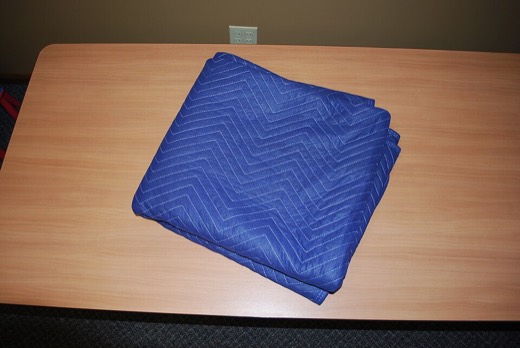
Heavy moving blankets (a moving blanket)
$DIY

Heavy moving blankets

What it is
Thick moving blankets, the quilted kind.
Who it's for
Anyone without a closet, or anyone making a closet better.
Why
Hang them around you and behind the mic, and stack them, because one layer doesn't absorb much. Proper sound blankets absorb a lot more.

Pictured: a moving blanket. Photo: DustinMoving, CC BY-SA 4.0, via Wikimedia Commons, resized

VocalBoothToGo
$$

VocalBoothToGo sound blankets

What it is
Blankets made for sound absorption, not for moving furniture.
Who it's for
Anyone upgrading a PVC booth or a closet.
Why
They absorb far more sound than moving blankets, especially when hung with pleats.
See it at VocalBoothToGoNot a paid link. We earn nothing on this.
Door
$DIY

Door sweep and weatherstripping

What it is
A sweep for under the door and foam strip for the frame.
Who it's for
Anyone recording in a room or closet with a door.
Why
Treatment stops echo, but it doesn't stop noise. Sealing the gaps around a door is the cheapest way to cut noise coming in.
Mass
$$

Mass loaded vinyl

What it is
Heavy, dense vinyl sheet for blocking sound.
Who it's for
People who need to block noise through a door or thin wall.
Why
Blocking noise needs mass, and foam or blankets don't have it. It's not pretty, so hang it behind something.
$$$

Auralex SheetBlok sound barrier

What it is
Auralex's mass loaded vinyl, a heavy, floppy sheet sold on a 4 by 30 foot roll.
Who it's for
People who need to block noise coming through a door or a thin wall.
Why
It's the real version of the mass loaded vinyl card above. It only works where it covers the whole surface and seals the edges, so pair it with a door sweep.

Photo: Sweetwater

$$

Thick acoustic absorption panels

What it is
Dense fabric-wrapped panels, 2 inches thick or more. Not the thin foam squares.
Who it's for
People treating the walls of a small room or a closet.
Why
Thick, dense panels soak up echo. Thin foam mostly doesn't, so don't expect much from it.
$$DIY

Auralex 2 inch mineral fiber boards

What it is
Six 2 by 4 foot boards of dense mineral wool, the stuff inside most good acoustic panels.
Who it's for
DIY people who want to build their own panels and wrap them in fabric.
Why
This is the rockwool route our tech coach points people to for treating a whole room. Building your own costs less than buying finished panels, as long as you don't mind a weekend of work.

Photo: Sweetwater

$$

Auralex ProPanel B224

What it is
One fabric-wrapped absorption panel, 2 inches thick and 2 by 4 feet.
Who it's for
People who want one or two finished panels behind the mic, or on the wall they face.
Why
A thick, dense panel does far more for echo than thin foam. Start with the wall in front of you and the one behind you.

Photo: Sweetwater

$$$

Primacoustic London 8 room kit

What it is
A boxed set of fabric-covered fiberglass panels in a few sizes, with the mounting hardware, sized for a small room.
Who it's for
People treating a small spare room or a big closet who'd rather buy one box than piece it together.
Why
Everything matches and it's all proper absorption, which takes the guesswork out. It won't soundproof the room, it just stops the echo.

Photo: Sweetwater

$$$$

Primacoustic Broadway 2 inch panels, 6-pack

What it is
Six 2 by 4 foot fiberglass panels, 2 inches thick, covered in fabric.
Who it's for
People treating a whole room properly, once voice over is paying for itself.
Why
This is the grown-up version of a closet full of clothes. Six big panels cover most of the walls in a small room.

Photo: Sweetwater

$$

Primacoustic Cumulus corner bass traps

What it is
Two fabric-covered traps that sit in the corners where two walls meet.
Who it's for
People whose room sounds boomy or boxy, which small rooms often do.
Why
Corners are where low, boomy sound builds up. Flat panels on the walls don't reach it as well as something that fills the corner.

Photo: Sweetwater

$$

Auralex LENRD foam bass traps

What it is
Four big triangular foam blocks that wedge into the corners, each 2 feet long.
Who it's for
People on a tighter budget who want something in the corners.
Why
They're much thicker than foam tiles, so they do more. Fabric-covered fiberglass traps still go lower, so treat these as the budget option.

Photo: Sweetwater

$$$

Primacoustic Stratus ceiling cloud

What it is
A 2 by 4 foot, 2 inch panel with a frame that hangs flat from the ceiling.
Who it's for
People who've treated the walls and still hear a bit of room.
Why
The ceiling is the bare surface most people forget, and in a small room your voice bounces straight off it. Do the walls first.

Photo: Sweetwater

$$$

Primacoustic GoTrap gobo

What it is
A thick panel on a stand, a portable wall of absorption you can move into place.
Who it's for
People recording in a shared room, or a living room that has to look like a living room afterwards.
Why
It's thick enough to work as a bass trap too. You put it right where you need it and move it out after.

Photo: Sweetwater

$$

Auralex Studiofoam Wedgies, 24-pack

What it is
Twenty-four 1 by 1 foot tiles of 2 inch acoustic foam.
Who it's for
People who want to calm down a small space and already have the big stuff covered.
Why
Real acoustic foam from a proper maker, not packing foam. Foam alone doesn't fix a room, though. It takes the edge off the high end and the flutter, so use it with blankets or thicker panels.

Photo: Sweetwater

Kaotica
$$

Kaotica Eyeball

What it is
A foam ball that goes around the mic.
Who it's for
People recording in a room they can't change, or who travel a lot.
Why
It's open-cell foam, so it cuts room sound at the mic but it doesn't block noise.
See it at KaoticaNot a paid link. We earn nothing on this.
$

sE Electronics RF-X reflection filter

What it is
A curved shield that mounts on the mic stand behind the mic.
Who it's for
People on a small budget who need a little help at the mic.
Why
It cuts some of the room sound reaching the back and sides of the mic. The room behind you still matters most, so hang a blanket there too.

Photo: Sweetwater

$$

sE Electronics Reflexion Filter Pro

What it is
The original reflection filter, a curved, layered shield that sits behind the mic on your stand.
Who it's for
People who travel, or who record in a room they can't change.
Why
It helps with the sound hitting the mic from the sides and back. It doesn't block outside noise and it can't treat the wall behind you, which is what the mic hears most.

Photo: Sweetwater

$$

Primacoustic VoxGuard VU

What it is
A curved absorber that mounts on the mic stand and wraps around the back of the mic.
Who it's for
Anyone comparing reflection filters.
Why
It's fiberglass rather than foam, like Primacoustic's wall panels, so it's a solid pick among the mic shields. Like all of them, it works best in a room that's already partly treated.

Photo: Sweetwater

Harlan
$$$

Harlan Hogan Porta-Booth Pro

What it is
A small folding booth that sits on a desk around the mic.
Who it's for
Voice actors who travel, or who can't give up a whole closet.
Why
It was designed by a voice actor for voice work, and it folds into a bag.
See it at Voice Over EssentialsNot a paid link. We earn nothing on this.
$$$

ISOVOX Go portable vocal booth

What it is
A padded, foam-lined hood on a stand. You put your head and the mic inside it.
Who it's for
People who travel, or who have no closet and no room to spare.
Why
It kills a lot of room sound because it's all around you, not just behind the mic. Some people find it stuffy for long sessions, and it won't stop a barking dog.

Photo: Sweetwater

VocalBooth.com
$$$

VocalBooth.com VO Acoustics Kit

What it is
A kit of acoustic panels made for voice rooms.
Who it's for
Intermediate voice actors treating a real room.
Why
It's sized for a voice room, so you're not guessing what to buy.
See it at VocalBooth.comNot a paid link. We earn nothing on this.
VocalBooth.com
$$$$

VocalBooth.com VO1 Desktop

What it is
A desk-sized isolation booth.
Who it's for
People who need real isolation but don't have floor space.
Why
It sits between a foam box and a full walk-in booth.
See it at VocalBooth.comNot a paid link. We earn nothing on this.
$$$$

ISOVOX 2 home vocal booth

What it is
The bigger ISOVOX, a larger padded hood on a stand, with a mic mount inside.
Who it's for
People who want something close to a booth sound for less than a walk-in booth.
Why
It treats the sound right at your head and the mic, so it works in rooms you can't change. It isolates less than a walk-in, so outside noise can still get through.

Photo: Sweetwater

Studiobricks
$$$$

Studiobricks VO booth

What it is
A modular isolation booth that comes with its walls already treated.
Who it's for
Full-time voice actors comparing walk-in booths.
Why
It snaps together quickly, blocks noise well and sounds less boxy out of the box.
See it at StudiobricksNot a paid link. We earn nothing on this.
WhisperRoom
$$$$

WhisperRoom booth

What it is
A full walk-in isolation booth.
Who it's for
Full-time voice actors in a noisy home.
Why
This is real isolation from outside noise. It's expensive and heavy, so measure your room and your doorway first.
See it at WhisperRoomNot a paid link. We earn nothing on this.

Stands, arms, shock mounts and pop filters

The small stuff that keeps the mic still and your P's soft.

FreeDIY

Pantyhose and a coat hanger

What it is
A pair of pantyhose stretched over a bent wire coat hanger.
Who it's for
Anyone starting this week with no budget.
Why
It was Anthony's first pop filter. It works.
Free, from the closet
$

Gooseneck nylon pop filter

What it is
A clip-on nylon pop filter on a bendy arm.
Who it's for
Everyone on a budget.
Why
It does the job and costs very little. Keep it about a fist's width from the mic.
$

Shure PS-6 Popper Stopper

What it is
A layered mesh pop filter on a metal gooseneck with a sturdy stand clamp.
Who it's for
Anyone who wants a nylon-style pop filter from a name brand.
Why
It's the real version of the gooseneck pop filter above, with a clamp that stays put. Keep it a few inches off the mic.

Photo: Sweetwater

$

Stedman Proscreen XL

What it is
A metal-mesh pop filter.
Who it's for
Anyone who wants a pop filter that lasts.
Why
Metal mesh rinses clean and sounds very transparent. It's a good swap if a foam windscreen makes your mic too dark.

Photo: Sweetwater

$

Stedman Proscreen PS101

What it is
A smaller metal-mesh pop filter on a gooseneck.
Who it's for
People who want the Stedman sound in a smaller size.
Why
Our tech coach names the PS101 and the XL as a clean swap for a foam windscreen. The PS101 costs less and takes up less space.

Photo: Sweetwater

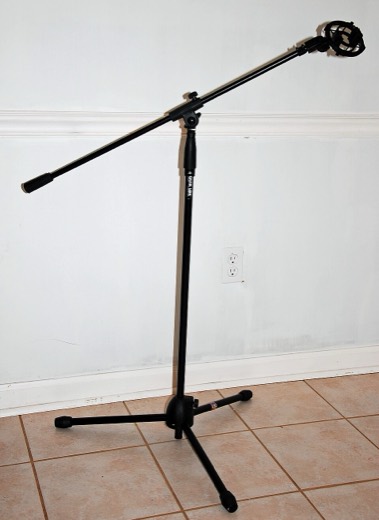
On-Stage MS7701B tripod boom stand (a similar tripod boom stand)
$

On-Stage MS7701B tripod boom stand

What it is
A tripod floor stand with a boom arm.
Who it's for
Anyone who records standing up.
Why
It's cheap, and it's sturdy enough to hold most mics where you need them.

Pictured: a similar tripod boom stand. Photo: Bubba73 (Jud McCranie), CC BY-SA 3.0, via Wikimedia Commons, resized

$

Gator Frameworks tripod boom stand

What it is
A tripod mic stand with a telescoping boom arm.
Who it's for
Anyone who wants a proper floor stand without paying for a K&M.
Why
A boom lets you get the mic in front of your face while the legs stay out of the way. Sturdier than the cheapest stands.

Photo: Sweetwater

$

On-Stage MS7201B round base stand

What it is
A straight mic stand on a heavy, round, flat base.
Who it's for
People recording standing up in a closet or a tight booth.
Why
A round base takes up less floor than tripod legs, so it fits in small spaces. It has no boom, so it suits a mic you address straight on.

Photo: Sweetwater

$

Basic scissor desk arm

What it is
A cheap spring-loaded arm that clamps to your desk.
Who it's for
Tight budgets and light USB mics.
Why
It's fine for light mics. Heavy mics make cheap arms droop, and some of them squeak.
$

On-Stage MBS5000 desk arm

What it is
A clamp-on desk arm with springs, with a mic cable already run through it.
Who it's for
People with a light mic who record sitting at a desk.
Why
It's the real version of the basic scissor arm above, and scissor arms suit light mics. A heavy mic will droop, so look at the RØDE or the Samson for those.

Photo: Sweetwater

$

RØDE SM6 shock mount

What it is
A shock mount with a pop filter attached.
Who it's for
Anyone whose mic didn't come with a shock mount.
Why
It stops desk bumps and footsteps from getting into the recording.

Photo: Sweetwater

$

Gator Frameworks universal shock mount

What it is
An elastic shock mount that fits most mics from 18 to 55 millimeters across.
Who it's for
Anyone whose mic came without a shock mount, or with a flimsy one.
Why
A shock mount stops desk bumps and footsteps from thumping into the recording. Check your mic's width before you buy.

Photo: Sweetwater

Rycote
$

Rycote InVision USM shock mount

What it is
A studio shock mount that uses plastic Lyre suspension instead of elastic bands.
Who it's for
People tired of bands wearing out and sagging.
Why
There are no rubber bands to snap.
$$

RØDE PSA1+ boom arm

What it is
A desk-mounted boom arm.
Who it's for
Anyone recording sitting down at a desk.
Why
It moves quietly, stays exactly where you put it, and it's still the arm we'd pick for most desks.

Photo: Sweetwater

$$

Samson MBA48 boom arm

What it is
A long, heavy-duty desk boom arm.
Who it's for
People who read both sitting and standing, or have heavy mics.
Why
It has the reach for sitting and standing reads, and its joints lock tight.

Photo: Sweetwater

$

Elgato Wave Mic Arm LP

What it is
A low-profile desk arm that stays low and out of the way.
Who it's for
People short on space, or who want the arm out of their eyeline and off camera.
Why
Low-profile arms are what our tech coach suggests when space is tight. It keeps the arm below your script instead of in front of it.

Photo: Sweetwater

$$

K&M 210/9 boom stand

What it is
A German-made floor boom stand.
Who it's for
People who want a stand that won't sag in the middle of a take.
Why
K&M stands last for years and hold heavy mics without drooping.

Photo: Sweetwater

Cables

Nothing fancy. Just don't buy the cheapest one twice.

A basic XLR cable, about 10 feet (XLR connectors)
$

A basic XLR cable, about 10 feet

What it is
A standard XLR mic cable.
Who it's for
Everyone going the XLR route.
Why
Any decent XLR works. Get one long enough that you're not stretched across the room.

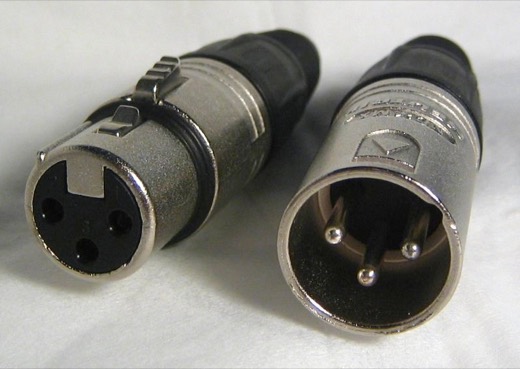
Pictured: XLR connectors. Photo: Wikimedia Commons contributor, CC BY-SA 3.0, via Wikimedia Commons, resized

$

Hosa Pro XLR cable, 10 foot

What it is
A 10 foot XLR mic cable from Hosa's Pro line.
Who it's for
Everyone who needs a decent cable without spending much.
Why
It's the real version of the basic XLR card above. Cheap, and fine for a home setup.

Photo: Sweetwater

$

Mogami Gold Studio XLR

What it is
A well-made, well-shielded XLR cable.
Who it's for
Anyone who wants to buy one cable and forget about it.
Why
For a home booth that never moves, Mogami Silver is plenty. Gold is for gear that gets moved and stepped on.

Photo: Sweetwater

WBC
$

WBC Pro Quad XLR

What it is
An affordable star-quad XLR cable with Neutrik plugs.
Who it's for
Anyone replacing the cheap cable that came with their mic.
Why
It's well shielded and flexible and it doesn't cost much.
$

ProCo AmeriQuad XLR cable, 10 foot

What it is
A 10 foot star-quad XLR cable.
Who it's for
People who want a well-shielded cable they can buy at Sweetwater.
Why
Star-quad wiring rejects hum and buzz better than a basic cable, like the WBC Pro Quad. Handy if your setup sits near power cables or a computer.

Photo: Sweetwater

$

A good USB cable

What it is
A short, decent USB cable for your interface or USB mic.
Who it's for
Anyone getting dropouts or crackles over USB.
Why
Sometimes the fix for mystery clicks is a better cable, plugged straight into the computer instead of a hub.
$

Headphone extension cable

What it is
An extension for your headphone cable.
Who it's for
Anyone whose interface sits outside the booth.
Why
It's a small thing that saves a lot of leaning and yanking.

Photo: Sweetwater

Recording and editing software

A DAW is the app you record and edit in. You can start free and pay later, or never pay at all.

Adobe
Recommended$ /mo

Adobe Audition

What we use at VO Journey

What it is
Adobe's audio editor, sold as a subscription.
Who it's for
Anyone who wants the same editor we use, and anyone already paying for Adobe apps.
Why
It's intuitive and powerful, and it sits between Audacity and Reaper. Its spectral view and noise tools are very good for cleaning up audio.
See it at AdobeNot a paid link. We earn nothing on this.
Free

Audacity

What it is
A free audio editor for Mac and Windows.
Who it's for
Everyone starting out.
Why
It's free and fine for auditions. Its built-in EQ is weak, so add a free parametric EQ like TDR Nova.
See it at AudacityNot a paid link. We earn nothing on this.
Free

UAD Explore FREE

What it is
A free pack of Universal Audio plugins, including the 1176 and LA-2A compressors.
Who it's for
Anyone who wants good compressors without paying.
Why
You don't need an Apollo, and it works in any of the common DAWs.
See it at Universal AudioNot a paid link. We earn nothing on this.
Free

TDR Nova

What it is
A free parametric EQ with a dynamic mode.
Who it's for
Audacity users, and anyone taming sibilance on a budget.
Why
It's much better than Audacity's built-in EQ, and the dynamic mode only cuts esses when they happen.
See it at Tokyo Dawn LabsNot a paid link. We earn nothing on this.
Free

GarageBand

What it is
Apple's free recording app.
Who it's for
Mac users who want to start today.
Why
It's already on your Mac. It's fine for practice, and most people move on once they're editing a lot.
See it at AppleNot a paid link. We earn nothing on this.
Reaper
$

Reaper

What it is
A full DAW with a free 60-day trial and a cheap personal licence.
Who it's for
Anyone who wants to grow into audiobook editing without a subscription.
Why
It's a one-time purchase and it handles plugins very well, but it has a steep learning curve. We earn nothing on it.
See it at CockosNot a paid link. We earn nothing on this.
TwistedWave
$

TwistedWave

What it is
A simple, fast audio editor for Mac and iPad, with a web version too.
Who it's for
Mac users who want something simpler than a full DAW.
Why
A lot of VO people record auditions in it because it's quick to learn.
See it at TwistedWaveNot a paid link. We earn nothing on this.
$$$

iZotope RX Standard

What it is
iZotope's full repair suite, including Mouth De-Click.
Who it's for
Anyone with mouth clicks, and audiobook narrators editing long projects.
Why
Mouth De-Click is the best tool there is for mouth noise, and it turns hours of hand editing into a batch process. Wait for a sale.

Photo: Sweetwater

$

iZotope Velvet

What it is
A budget plugin with a good mouth de-clicker.
Who it's for
Anyone fighting mouth clicks who can't spend RX Standard money yet.
Why
It removes clicks far better than the free de-clickers in most DAWs, and it's often on sale.

Photo: Sweetwater

$

iZotope RX Elements

What it is
The cheapest version of iZotope RX.
Who it's for
People who want to try RX before spending more.
Why
It's a way into RX, but for mouth clicks we'd get RX Standard for Mouth De-Click, or Velvet on a budget.

Photo: Sweetwater

Waves
$

Waves plugins

What it is
A huge library of plugins, sold one at a time or in bundles.
Who it's for
Intermediate editors building a processing chain.
Why
F6, C1, NS1 and Sibilance cover most of a VO chain. They go on sale all the time, so don't pay full price.
See it at WavesNot a paid link. We earn nothing on this.
FabFilter
$$

FabFilter Pro-Q, Pro-DS and Pro-G

What it is
Precise EQ and de-esser plugins, plus a gate that works as an expander.
Who it's for
People building a clean vocal chain who want to see exactly what each plugin is doing.
Why
Pro-DS is a clean, transparent de-esser, and Pro-G works as a gentle expander. They're pricey, so buy one at a time.
See it at FabFilterNot a paid link. We earn nothing on this.
Source-Connect
$ /mo

Source-Connect

What it is
The remote-session link a lot of studios use to record you from anywhere.
Who it's for
Working voice actors getting directed sessions.
Why
Some clients ask for it by name. You don't need it until they do.
See it at Source ElementsNot a paid link. We earn nothing on this.

iPads and script readers

Paper rustles. A tablet doesn't, as long as you turn the notifications off.

$

Manhasset music stand

What it is
A sturdy music stand for paper scripts.
Who it's for
People who still like paper.
Why
Tilt it so the paper doesn't bounce your voice back into the mic.

Photo: Sweetwater

$

Tablet clamp for a mic stand

What it is
A clamp that holds a tablet on a mic stand.
Who it's for
Anyone reading from a tablet in the booth.
Why
It puts the script at eye level, so you're not reading down into your chest.
$

IK Multimedia iKlip Xpand

What it is
A tablet holder that clamps onto a mic stand.
Who it's for
Anyone reading scripts from an iPad or tablet in the booth.
Why
It's the real version of the tablet clamp above. Angle the tablet a little so it doesn't bounce your voice back into the mic.

Photo: Sweetwater

Amazon
$

Amazon Fire HD 10

What it is
A cheaper 10-inch tablet.
Who it's for
Budget script readers.
Why
It's plenty for reading scripts and PDFs. It's slower than an iPad, and it costs a lot less.
$$

AirTurn page-turn pedal

What it is
A Bluetooth foot pedal that turns the page for you.
Who it's for
Audiobook narrators.
Why
Your hands stay off the screen. Test it for clicks before you trust it on a take.

Photo: Sweetwater

Apple
$$$

Apple iPad

What it is
A tablet to read scripts from instead of paper.
Who it's for
Anyone tired of rustling paper or a bright laptop screen.
Why
There's no paper noise, and you can zoom and mark up scripts. Turn notifications off before you record.

Lighting and cameras for on-camera auditions

For self-tapes, Zoom callbacks and on-camera work. Your booth mic still handles the audio.

$

18-inch ring light with stand

What it is
A ring light on a floor stand.
Who it's for
Anyone starting self-tapes or on-camera auditions.
Why
Even light on your face for very little money. Watch for the ring showing up in glasses.
$

Gator Frameworks 10 inch ring light

What it is
A 10 inch LED ring light on a small tripod.
Who it's for
People who do the odd Zoom callback or self-tape from a desk.
Why
It's smaller than the 18 inch ring lights, so it suits a desk more than a full-length self-tape.

Photo: Sweetwater

Two-light softbox kit (a similar softbox kit)
$

Two-light softbox kit

What it is
Two soft lights on stands.
Who it's for
Actors doing full self-tapes, not just webcam calls.
Why
Two soft lights at about 45 degrees either side of the camera is the classic self-tape setup.

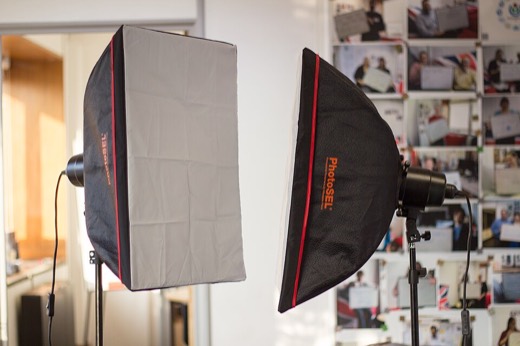
Pictured: a similar softbox kit. Photo: Katie Chan, CC BY-SA 3.0, via Wikimedia Commons, resized

$

Logitech Litra Glow

What it is
A small, soft light that clips onto the top of your computer screen.
Who it's for
People who want to look decent on Zoom callbacks and classes.
Why
It lights your face softly without a stand taking up floor space. Fine for calls, though a bigger light looks better on a real self-tape.

Photo: Sweetwater

$

Phone tripod with a remote

What it is
A tripod with a phone clamp and a Bluetooth shutter remote.
Who it's for
Anyone shooting self-tapes on a phone.
Why
Your phone camera is probably better than your webcam. Shoot sideways, at eye level.
$

Benro smart selfie stick and tripod

What it is
A phone tripod that doubles as a selfie stick, with a Bluetooth remote.
Who it's for
Anyone shooting self-tapes on a phone.
Why
It's the real version of the phone tripod above. The remote means you can start and stop takes without walking back to the phone.

Photo: Sweetwater

$

Collapsible backdrop

What it is
A pop-up grey or blue backdrop.
Who it's for
Anyone without a plain wall to stand in front of.
Why
Casting wants to see you, not your bookshelf.
$

Logitech C920

What it is
A 1080p webcam.
Who it's for
Zoom classes and casual on-camera work.
Why
It's the webcam a lot of people already have, and it's fine for class.

Photo: Sweetwater

$$

Elgato Facecam MK2

What it is
Elgato's 1080p webcam, with manual exposure and focus controls.
Who it's for
People who want a sharper webcam image than the C920 for callbacks and classes.
Why
You can lock the exposure and focus so the picture doesn't pump when you move. Your phone's camera is still better for a real self-tape.

Photo: Sweetwater

$$

Elgato Key Light

What it is
A flat LED panel that clamps to your desk.
Who it's for
People filming at a desk who want softer light than a ring gives.
Why
Soft light you can dim and warm up from your computer.

Photo: Sweetwater

Logitech
$$

Logitech Brio 4K

What it is
A 4K webcam.
Who it's for
People who want a sharper picture for self-tapes and callbacks.
Why
It's sharper than a basic webcam, and it copes better in low light.

Think something's missing? Tell us and we'll take a look. Contact us

From our tech class

Picks from our tech class

These are the tools members bring to our monthly tech class and to the #processing channel in our Discord, and the ones our tech coach helps with most.

  • UAD and ApolloUniversal Audio's interfaces and the plugins you can record through.
  • WavesA huge plugin library. Wait for a sale.
  • FabFilterClear, precise EQ and dynamics plugins.
  • iZotope RXNoise and mouth-click repair.
  • ReaperThe cheap DAW a lot of narrators end up on.
  • Adobe AuditionGood spectral editing if you already pay for Adobe.
  • AudacityFree, and fine for auditions.

A common starting order for a voice over chain is a highpass filter, a de-clicker, a de-noiser, an expander, corrective EQ, compression, additive EQ and a de-esser, then loudness normalization and a limiter to hit ACX spec.

The questions we get asked most

Do I need an expensive mic to start?

No. Clean and dry matters more than the mic. A cheap mic in a closet full of clothes will beat an expensive mic in a bare room.

USB or XLR, and when should I upgrade?

USB is one cable and done. XLR needs an interface, but you can change the mic or the interface later without replacing both. Start with whichever you can afford, and upgrade when your recordings are holding you back.

Should I get a condenser or a dynamic mic?

For audiobooks and most voice work, get a condenser, because it picks up the detail in your performance. If it shows up your room, the fix is the room, not a dynamic. A closet or blankets go a long way.

Do I need a real booth to get work?

Not to start. A closet full of clothes, or moving blankets hung around you, gets a lot of people to a sound that passes. Buy a booth when your space can't get quiet enough.

Will foam panels from Amazon fix my room?

Not on their own. Thin foam squares take the edge off the high end, but they don't do much for echo or outside noise. Soft, heavy things like clothes and blankets do more, and thick panels do more again.

What's a noise floor, and what do casting sites want?

It's how loud your recording is when you're not talking. Record a few seconds of silence and look at the level. A closet booth often lands around -55 to -60 dB, and ACX asks for -60 dB or lower for audiobooks.

Which headphones should I get?

Closed-back ones, so your playback doesn't leak into the mic. The Sony MDR-7506 is the safe answer, and a lot of pros still use them.

Which software should I use?

We use Adobe Audition at VO Journey, so it's our pick. Audacity is fine if you want free today. Reaper is a good option if you'd rather not pay for a subscription.

Should I use noise reduction on my recordings?

A little, and only after you've fixed what you can in the room. Too much makes you sound watery and processed, and casting can hear it.

What do I need for live directed sessions?

Most start on Zoom or a phone patch. Source-Connect comes in when a client asks for it.

Can someone check my setup before I buy anything?

Yes. Bring a recording to a free class, or come to our monthly tech class once you're a member. Before you spend money is the best time to ask.

Words you'll see on gear pages

XLR
The three-pin cable most studio mics use.
Audio interface
The box that connects an XLR mic to your computer.
Phantom power
Power a condenser mic needs, 48 volts. Your interface supplies it.
DAW
Digital audio workstation, the app you record and edit in.
Noise floor
How loud your recording is when you're silent.
Dynamic mic
A sturdy mic that hears what's close to it and not much else.
Condenser mic
A more sensitive mic that picks up more detail, and more of your room.
Closed-back
Headphones with sealed cups, so the sound stays in your ears.

Last reviewed September 2026.

Not sure your setup is good enough?

Bring a recording to a free class and ask. We'd much rather you find out your closet is fine before you spend anything.

Plans from $37. CORE is $39 your first month, then $78 a month. Cancel anytime. 30-day money-back guarantee.

Not sure what to buy? Ask at a free class.
Free class