Step-by-Step Guide to Start Voice Acting with No Experience
Jul 12, 2023
Updated September 2026.
When I started, I had no idea what I was doing (and I still bumble around). I was working a full-time teaching job, so I'd teach all day and record at night. My first booth was a frame of plastic pipe with packing blankets thrown over it, and I put it up and took it down every single night because I didn't have the space. My microphone was a $40 Blue Snowball. I didn't even know what a pop filter was yet.
I built my business in that hut.
So if you're wondering how to start voice acting with no experience, I want you to know that's where a lot of us start. Nobody hands you experience. You go and get it, one read at a time.
This is the step-by-step version of what I'd tell you if you walked into one of our classes tomorrow. It's the order I'd do things in now, knowing what I know.
What voice acting actually is
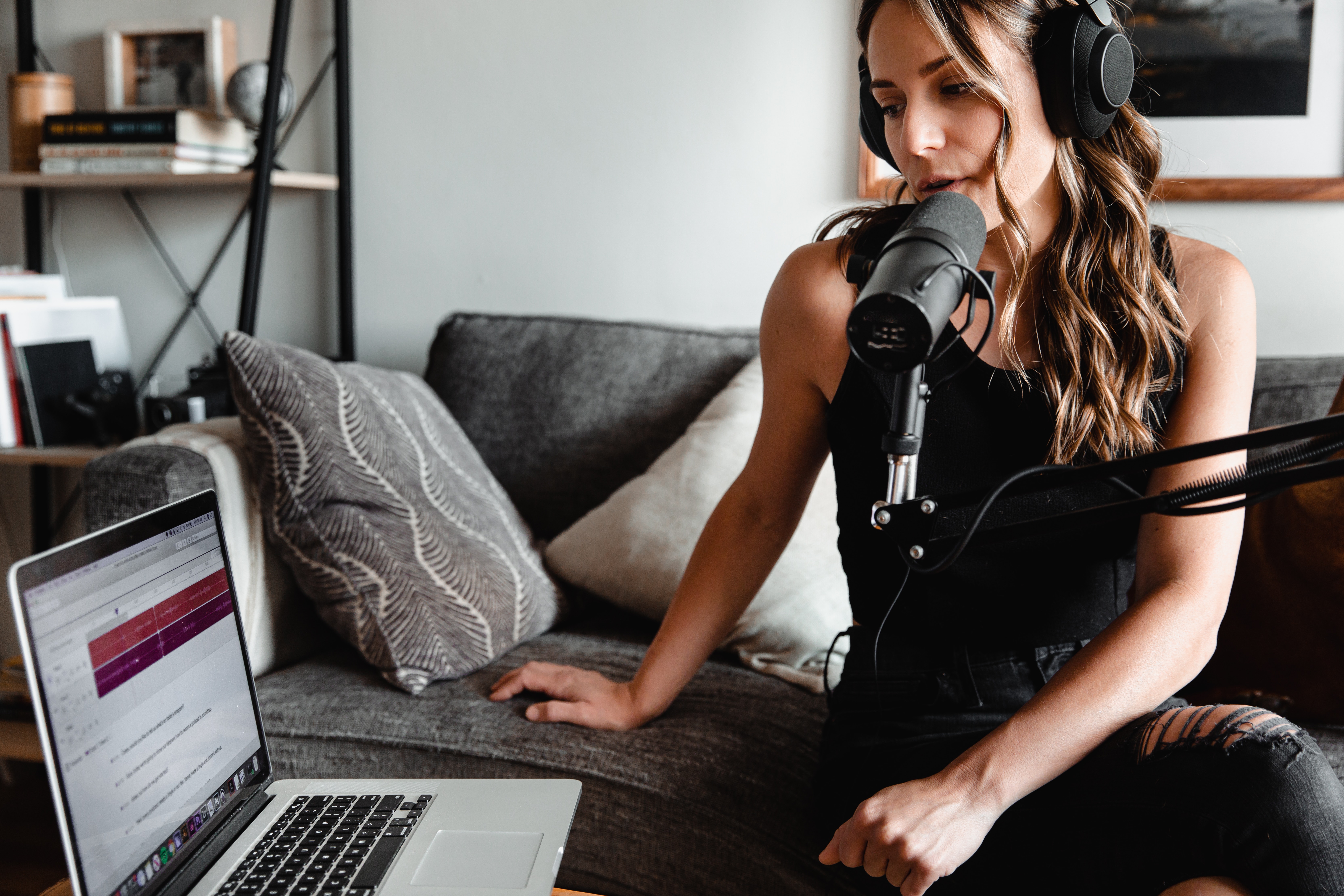
Voice acting is acting. That sounds obvious, but a lot of people start out thinking it's about having a nice voice. It isn't. It's about taking words on a page and making somebody believe you mean them, without anybody seeing your face.
And there's a lot of different work under that one name. Commercials, e-learning, video games, animation, audiobooks, corporate narration. They don't all want the same thing from you. An audiobook about history and a bloody sci-fi video game need completely different acting, and one of the first mistakes I see is voice actors approaching every category the same way.
You don't need a special "type" of voice to begin. You need to be willing to learn the acting and do the reps.
Step 1: Get the right training (start with the acting)
I always say that your gear, your studio, your pictures, your marketing and all that stuff is the icing, and your ACTING is the cake.
So start with the cake. Training gives you the basics of delivery, like pauses, speeding up and slowing down, and where to put the emphasis in a line. It also gets you used to taking direction, because at some point somebody is going to say "Can you give me one more, a little warmer?" and you need to be able to do it.
The biggest thing I see new voice actors struggle with is sounding natural. When they talk to you, they're completely normal. When they get in front of the microphone, they turn into something else. I used to call it the crap between here and the microphone. Getting past that is most of the early work.
At VO Journey Academy we do this live on Zoom every week. Gabby Nistico teaches Acting on Monday nights, I teach Marketing 101 on Tuesdays, Script Workout is on Wednesdays and Launch Pad with Angela Ohlfest is on Thursdays.
If you want to see what that looks like before you spend anything, come to Free Class Week, Monday 12 to Thursday 15 October. You can sit in on all four classes. It's free. No card, no call.
Step 2: Practice out loud every day
Read something out loud every day. Record it on your phone and listen back. Where did you rush? Where did you sound like you were reading instead of talking to somebody?
Here's a drill I like. Say "The dog ran home" four times, and hit a different word each time. Then take one sentence from a script and say it at three different speeds. Can you really hear the difference? If you can hear it, you can fix it.
You don't need to buy scripts to practice. We have over 750 free ones in the VO Journey scripts library, with commercial, audiobook and duet scripts, so you can practice with a friend too. If you need a warm-up first, start with these 25 tongue twisters and these voice acting exercises.
Step 3: Build a simple home studio
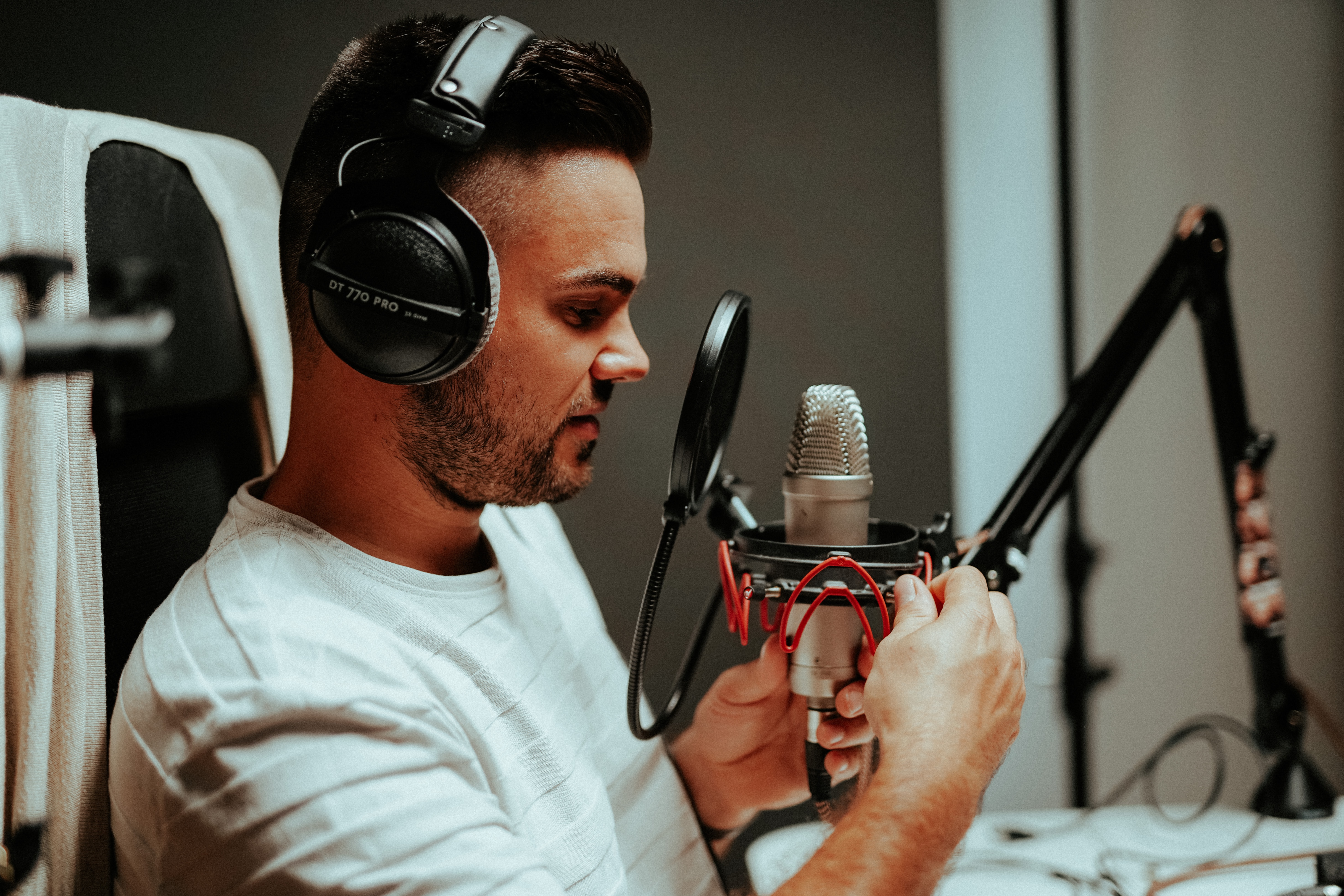
You don't need an expensive studio to start. I mean it. Find the quietest space you've got and put something soft around you, so your voice isn't bouncing off bare walls. A closet full of clothes works. Packing blankets work. My fort did that job for years.
Then you need a decent microphone, headphones and some recording software. Don't buy the most expensive gear out there on day one. Buy something good enough, learn how to use it, and upgrade when the work pays for it.
If you want more detail, I've written about setting up a voice over recording studio and about the best starter microphones for voice actors.
The other half of this is learning to edit. Your audio quality has to be the best it can be for your setup, because poor audio will hold you back even when the read is great.
Step 4: Make your demo reel (when you're ready)
Your demo is your audio business card. It's the first thing a client or an agent hears, and they'll decide pretty fast.
A commercial demo is usually short, around 60 to 90 seconds, with a few different spots that each show something different about you. A narration or audiobook demo lets them hear you hold a story for a bit longer.
My advice is don't rush it. A demo you made in your first month will probably sound like your first month. Get some training and some reps in first, so the demo shows where you actually are.
Step 5: Start auditioning
This is where you find out what works. And I'll be honest, there's a lot more competition than when I started. When I started on Fiverr in 2017 there were about 6,000 voice over gigs listed on there. Now there are over 40,000.
That doesn't mean don't do it. It means treat auditioning like part of your business instead of a lottery. Keep track of every audition you send and every job that comes from it, so you can find out how many auditions it takes YOU to book a job. Send more than one take, and make the takes actually different from each other. And keep each audition quick, so you can do a lot of them.
I wrote a whole post on this, How Many Auditions Does It Take to Book a Voice Over Job?
I remember a stretch where nobody answered a single audition I sent. What got me out of it was changing my reads instead of just sending more of the same. Sending it is the key. But send something different when what you're doing isn't working.
Step 6: Look at the audiobook route
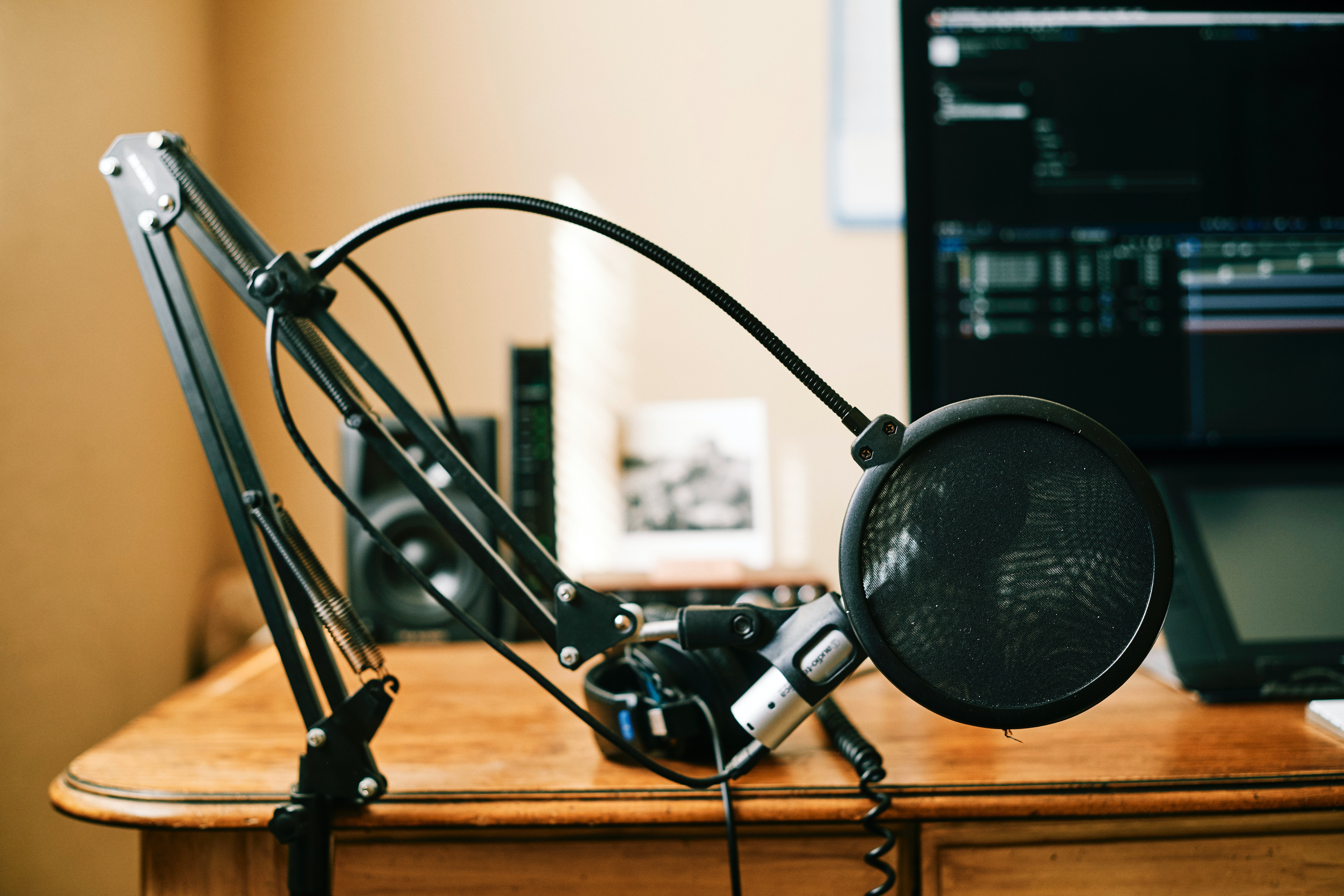
If you like to read, audiobooks are one of the best ways to get real experience, because you're doing long-form work on real books for real authors.
The most common way in is ACX, which is Audible's marketplace. Authors post their books, narrators audition from an excerpt, and the author picks who they want. Files have to meet ACX's technical standards before a book can go live, and I have a walkthrough on formatting your audio files for ACX in Adobe Audition.
The other way in is the reason we built Academy Voices. It's our audiobook publishing side, and our narrators have published over 750 audiobooks through it. Every VO Journey Academy member gets free access. You narrate real books for real authors, the royalties are paid out for 20 years, and there's a file checker that also fixes your files so they pass the technical requirements.
Angela Ohlfest, who runs Launch Pad, came in as a VO Journey student and has narrated over 250 audiobooks. That's where this can go.
If you want audiobook material to practice on right now, try the audiobook section of the scripts library.
Step 7: Learn what the work pays
You have to put the business hat on, because this is a business. Or it's just a hobby.
That means knowing what the different kinds of voice work usually pay before you quote anybody. Our voice over rate guide lays out typical rates by type of job. I'm not going to promise you a number, because it depends on the work and on how much you put in.
It also means being careful. New voice actors get targeted by fake jobs, so if a "client" wants you to pay them something or cash a check for them, walk away.
Step 8: Find your people and keep learning
This business can be lonely if you do it by yourself in a closet. Find other voice actors. You'll learn faster, you'll hear about work you'd never find alone, and you'll have people who understand why you're excited about a three-hour audiobook.
That's a big part of what VO Journey Academy is. Live classes every week, a Discord community, and people who are a few steps ahead of you and happy to tell you what they did.
And keep learning. I finally have a master plan after ten years, and I'm still changing things. You never really stop.
Come try a class for free
If you've read this far, you're serious. So come see how we do it.
Free Class Week runs Monday 12 to Thursday 15 October. Acting with Gabby Nistico on Monday at 6pm ET, Marketing 101 with me on Tuesday at 8pm ET, Script Workout on Wednesday at 8pm ET (never recorded, so it's a safe room to take risks) and Launch Pad with Angela on Thursday at 8pm ET. Come to one night or all four. It's free, and there's no card and no sales call.
If you already know you want in, your first month of CORE is $39, then $78 a month after that. You can join here.
Go read something out loud today.
Anthony